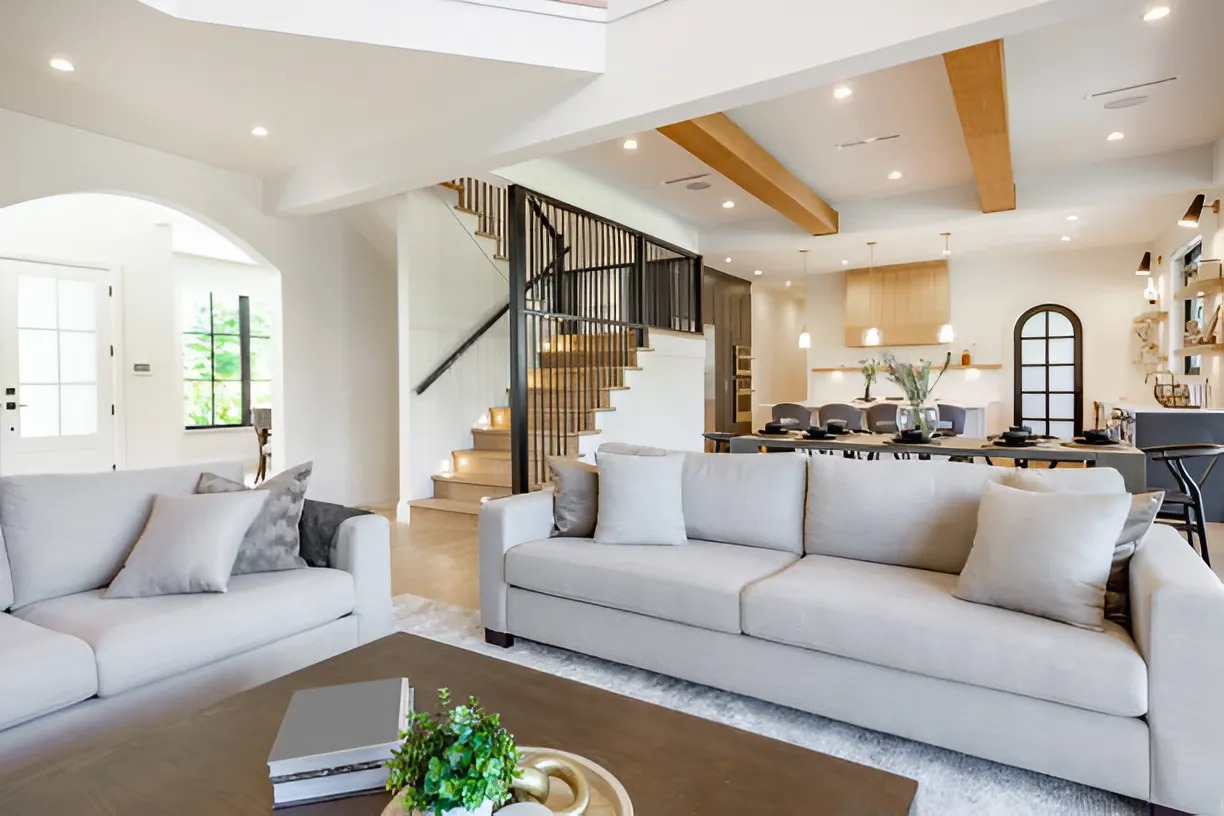
Open concept homes have become the gold standard in modern living, breaking down walls to create seamless transitions between living, dining, and kitchen spaces. This design fosters togetherness, openness, and light, but it also brings a unique challenge: selecting an interior paint palette that feels unified without becoming monotonous. When everything is visible at once, color choices matter more than ever.
Here’s how to approach interior paint for open concept homes to achieve balance, flow, and personality.
The Power of a Cohesive Foundation
A unified interior paint palette starts with a strong base color. This doesn’t mean you have to coat every wall in the same hue, but selecting a consistent backdrop creates harmony across the space. In open layouts, where sightlines stretch from the kitchen to the living room, competing colors can feel jarring. A neutral base—like soft beige, warm greige, or cool-toned white—offers versatility. These shades work across lighting conditions and allow other design elements like furniture, artwork, and cabinetry to stand out.
When choosing a foundational interior paint color, pay attention to undertones. A warm gray might clash with a cool blue accent wall or stainless steel appliances. Hold paint swatches against flooring, furniture, and finishes in natural light to ensure undertones align across the home.
Transition with Purpose: Zoning Through Tone
One way to maintain unity while introducing variation is through tone-on-tone zoning. Instead of stark contrast, use variations of the same interior paint family to subtly differentiate areas. A slightly deeper taupe for the dining nook or a faint blush for a reading corner creates visual interest without disrupting the overall flow. This approach allows the open space to breathe while still offering definition.
Hallways, kitchen backsplashes, and built-ins are ideal spots to play with secondary tones. These spaces act as natural dividers, offering a pause between dominant paint areas. Think of them as color bridges—less about separation and more about transition.
Accent Walls: To Use or Not to Use?
Accent walls can be tricky in open concept layouts. One bold wall in an open space may draw the eye too sharply or feel out of place. But when used strategically, a feature wall can anchor a space. The key is subtlety. Opt for a shade that complements your main interior paint palette rather than competing with it. A deep navy, olive green, or muted clay can add richness when framed by neutrals.
Accent colors work best when echoed elsewhere—through textiles, décor, or upholstery—to avoid a disjointed look. The color shouldn’t feel like a stand-alone statement, but rather a thread woven through the entire design.
Let Architecture and Light Guide You
In open concept homes, architectural features like beams, trims, and built-in shelves offer natural guidance for color breaks. Instead of fighting the structure, use it to enhance your interior paint transitions. Painting beams a contrasting neutral or highlighting trim in a crisp white can add depth without introducing new color families.
Natural light also plays a pivotal role. South-facing rooms may wash out pale tones, while north-facing spaces can make cool colors feel icy. Assess how daylight moves through the space before locking in a palette. What looks harmonious in morning light may appear mismatched by evening.
Texture, Finish, and Flow
Finish matters just as much as color. In open layouts, where surfaces blend into one another, gloss and texture create subtle distinctions. Using an eggshell or satin finish in high-traffic areas like kitchens adds durability while maintaining a soft sheen. For living areas, matte or flat finishes provide a smooth, sophisticated feel. Keeping the finish consistent across walls ensures that your interior paint feels curated rather than chaotic.
Think beyond walls too. Painted ceilings, doors, and even furniture can be part of the palette. These layers, when thoughtfully coordinated, add richness and cohesion.
Trust the Power of Restraint
It’s tempting to treat every corner of your open home as a separate design opportunity. But in truth, restraint is your best tool. A well-executed interior paint palette whispers luxury, balance, and intention. Rather than crowding the space with multiple statements, focus on flow—how one color hands off to another, how the eye moves across the space, and how it feels to live in it.
A cohesive interior paint palette doesn’t mean boring. It means deliberate. And in open concept homes, that deliberateness is what elevates a good space into a great one.
Remember, paint isn’t just a backdrop—it’s a key design element that can shape the mood, flow, and function of your entire space. Invest time in getting it right, and your home will reward you with timeless elegance and effortless harmony.
Choose The Oregon Painting Company for Expert Residential Painting Services in Grants Pass, OR
Ready to bring your open concept home to life with a seamless, sophisticated look? Choose The Oregon Painting Company for expert residential painting services in Grants Pass, OR. Our team understands how to craft unified interior paint palettes that enhance flow, elevate style, and reflect your unique vision. From consultation to final coat, we ensure every brushstroke adds value to your space.
Let’s create a home that feels as cohesive as it looks—reach out today to schedule your personalized estimate.